Differences and Similarities With Art Nouveau and Art Deco
The difference between Art Deco and Art Nouveau is often confusing. Whereas most people are vaguely familiar with the historical and stylistic developments of Art Nouveau and Fine art Deco in paintings and sculptures, 'blueprint movements' in general receive much less attention. In this commodity we depict the evolution and the master differences between Art Deco and Art Nouveau.
The master difference between Fine art deco en Art Nouveau
To answer the question in the championship of this article directly: as a rule of thumb, Fine art Nouveau is the more organic style whilst Art Deco tends to exist more than polished. Yet, they were established in different époques with different motives. See also the examples below.
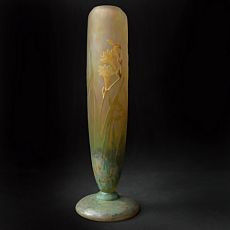 Art Nouveau vase, by Daum Frères, circa 1900
Emergence of 'applied arts'
For many centuries, art academies dominated the general concept of art all over Western Europe. Hierarchically speaking, painting and sculpture were therefore regarded as the "highest" forms of art, whereas design and the decorative arts were seen as "lower" forms, causing a widespread gap betwixt the fine and applied arts.
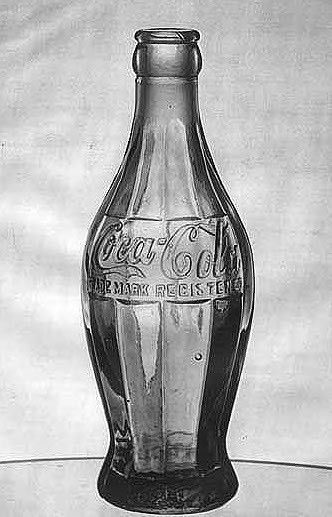 The "Coca-Cola bottle" a squeamish example of the 'applied' Art Deco mode, combining beauty and functionality in an everyday design
Towards the stop of the nineteenth century, after yet some other neo-classical insurgence, the want to carelessness these strict historical styles and hierarchies grew larger. At the aforementioned time, the industrial revolution had caused production to become highly mechanized. This, in turn, made artists seek out a revival of practiced craftsmanship.
Characteristics of Fine art Nouveau
Fine art Nouveau became the label that was given to the modernist movement that erupted from this desire. Information technology's difficult to pinpoint the exact moment or location of its institution, considering there were several similar movements taking place all over Europe at the time. But between 1890 and 1914, Art Nouveau prevailed.
The Parisian art gallery La Maison de l'Art Nouveau, which was owned by the avant-garde fine art collector Siegfried Bing (1838-1905), was one of the first galleries to brandish and publicize about a large collection of works that were created during this movement. Hence why its name is oft credited to this source.
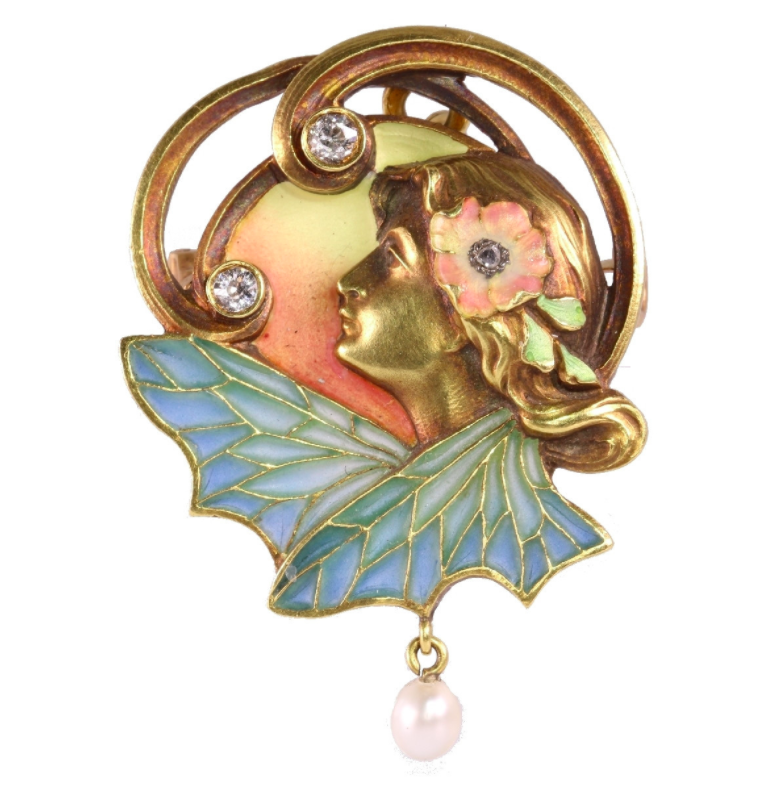 Art Nouveau pendant/ brooch 1890, available at Adin Fine Antique Jewellery
Art Nouveau artists drew their inspiration from organic and geometric forms, creating elegant and flowing designs with a distinct emphasis on contours, filled in with muted tones. The hype surrounding Japanese prints at that time, specially its floral and curved patterns, formed some other very important influence.
Art Nouveau designs were practical to a wide range of disciplines, from graphic arts to furniture, interior ornament, architecture and the fine arts, exemplified at its all-time by Gustav Klimt'south work.
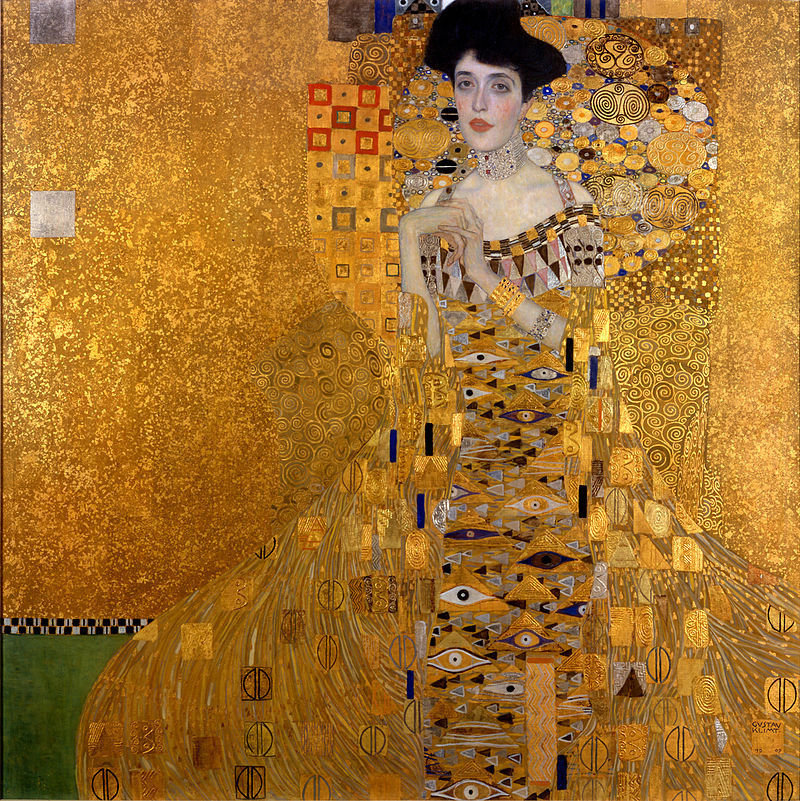 Portrait of Adele Bloch-Bauer I,besides chosenThe Lady in Gilded orThe Woman in Aureate by Gustav Klimmt, 1907
Issue of the Paris Exposition Universelle of 1900 on Art Nouveau
The Paris Exposition Universelle of 1900 gave Art Nouveau a major boost. Information technology was held to celebrate the achievements of the past century and to accelerate development into the next and displayed many technological innovations and the latest artworks. The off-white visited by nearly fifty millions people was a real record!
Different names for Art Nouveau
In Germany, the style was popularised and promoted by a magazine called Jugend illustrierte Wochenschrift für Kunst und Leben, which is the reason why in Frg (and well-nigh Nordic countries) this style is also known equally "Jugendstil".
In Republic of austria, Art Nouveau was beginning popularised past artists of the Viennese Secession movement, which led to the proper noun Sezessionstil.
Even in English language speaking countries, different terms were used to describe this decorative way; in the United States information technology was referred to every bit the 'Tiffany Way' and in the Britain people too spoke of the Glasgow Way.
Despite the big multifariousness across dissimilar countries and areas of design, the common denominator of Fine art Nouveau was a determination to button beyond the historical boundaries.
Item of the 'Art Nouveau fashion" façade of the Hotel Céramic, Paris
Fine art Nouveau artists wanted to create a new reality, a mod world with its ain vocabulary. The fashion is characterised by the raw force of nature, showing dynamic, whiplash curves and motifs. Nowadays, Fine art Nouveau is considered to have paved the way for the mod art and blueprint styles of the 20th century. A great number of its monuments are besides listed equally UNESCO World Heritage, including the historic heart of Riga and Hotel Tassel in Belgium.
Emergence of Art Deco
Just before the First World War, Fine art Nouveau had already started to fade out, making manner for a more than modern aesthetic: Art Deco.
Decorative artists experienced a rise in condition following the plough of the century; similarly, a rising in wealth and social as well as technological progress gave birth to the widespread luxury industry. This golden combination solidified the Art Deco motion.
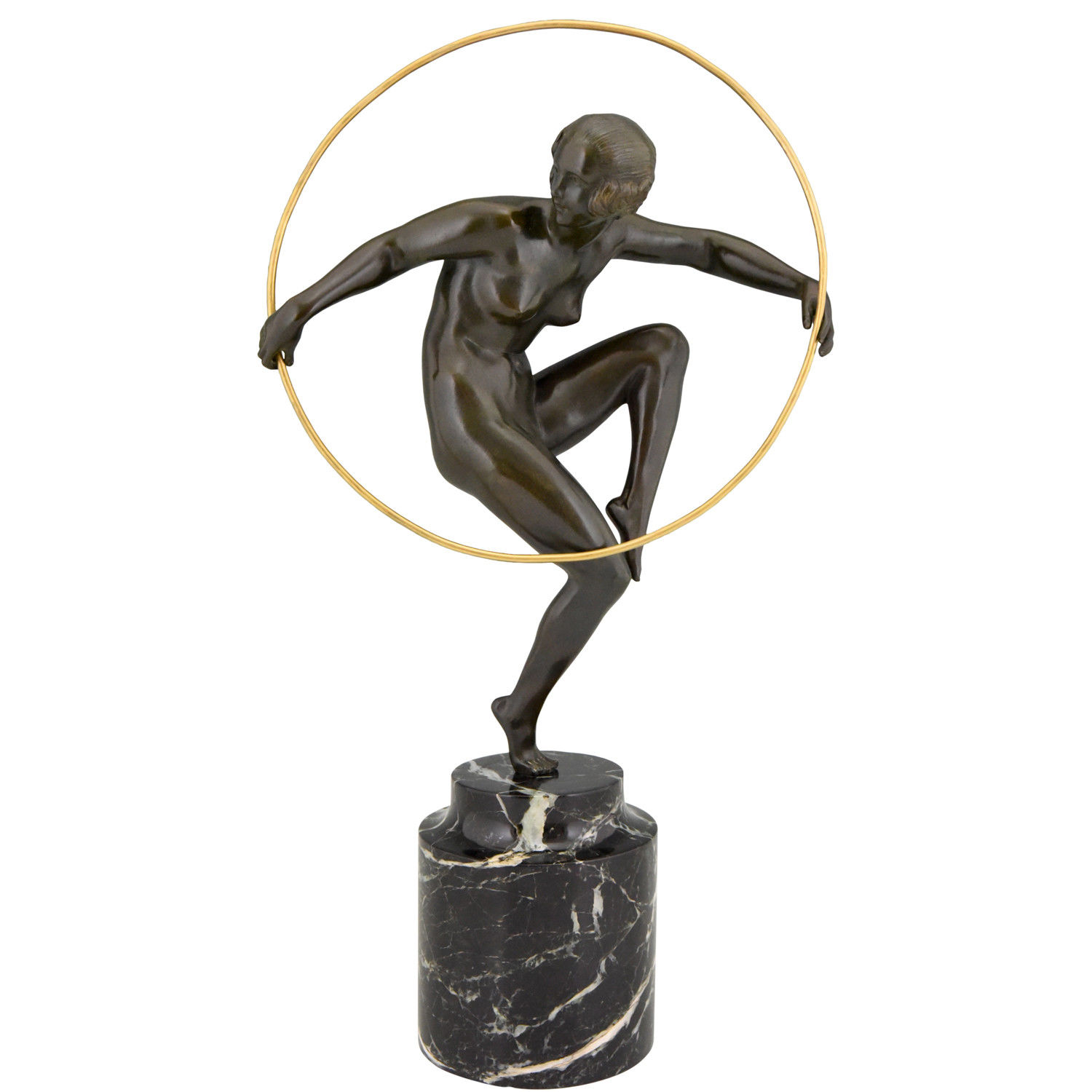 Art Deco sculpure 'Nude Hoop Dancer' by Andre Marcel Bouraine (Briand), c.a. 1925, by gallery 'Het Ware Huis'
Art Deco truly embraced the influence of the industrial revolution. Fine art Deco designs were therefore more symmetrical and streamlined, attempting to make machine-made objects more than aesthetically highly-seasoned to everybody.
The Chrysler Building designed past William of Alen's for example can exist seen as an existent Art Deco icon. The use of curved forms and assuming colours are very typical.
Typical example of Art Deco, 1930, The Chrysler Building, New York
Fine art Deco was adopted past designers and architects around the earth and has left behind an impressive legacy in a not bad number of cities. Fine art Deco was likewise highly influenced by the gimmicky artists of that period, especially past the abstruse shapes and forms of the Cubists, notably Pablo Picasso and Georges Braque.
Besides glass as an medium enjoyed an important status throughout the Art Deco era, information technology became a staple of the luxury industry. René Lalique's work is especially symbolic of this menstruum.
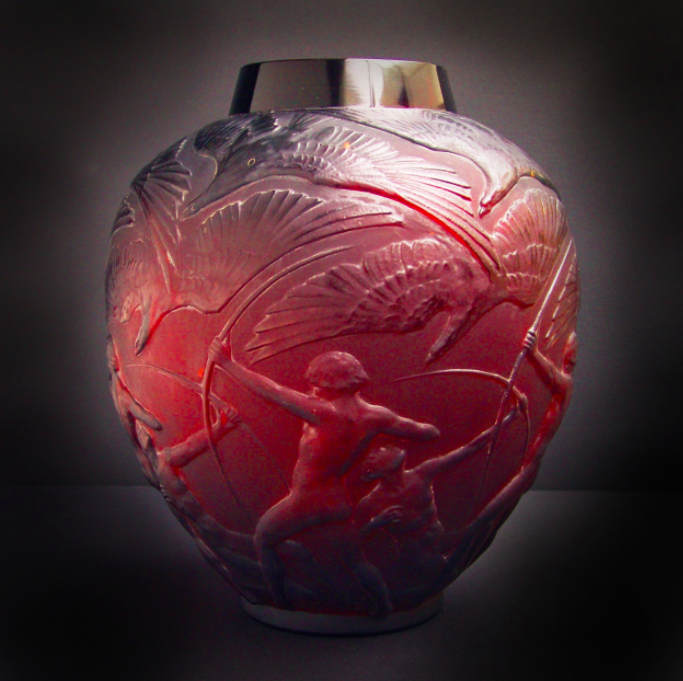 René Lalique, Art Deco manner vase 'Archers', 1921 available through Lennart Booij Fine Fine art and Rare Items
Contrary to Fine art Nouveau, the definition of the Art Deco movement derived from a single source: the Exposition Internationales des Arts Décoratifs et Industriels Modernesthat took place in 1925. In France, Art Deco was referred to as Style Moderne.Art Deco remained the decorative art style during the 20'south and xxx's and was in a sense more eclectic, every bit it encompassed elements from different styles.
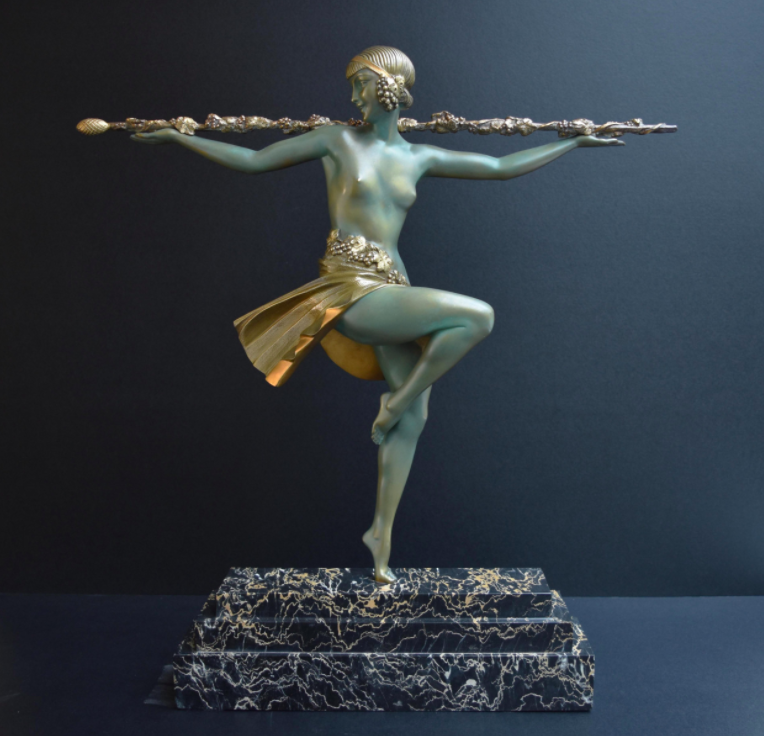 Art Deco sculpture 'Dancer with Thyrsus' by Pierre le Faguays, 1925
Modernistic art replaces Art Deco
Unfortunately, Europe was hit by the Neat Depression during the 1930's. The average wealth plummeted, leaving many Art Deco enthousiasts to no longer exist able to afford its rich materials, luxury items and furniture. In terms of architecture, Art Deco as well had a difficult fourth dimension competing with mod architecture, as epitomised by the work of Le Corbusier and the German language Bauhaus movement.
Le Corbusier was a brilliant spokesperson for modernistic compages, he considered a house to be no more "a machine to live in". He as well famously declared the decorative arts to be a dying medium.
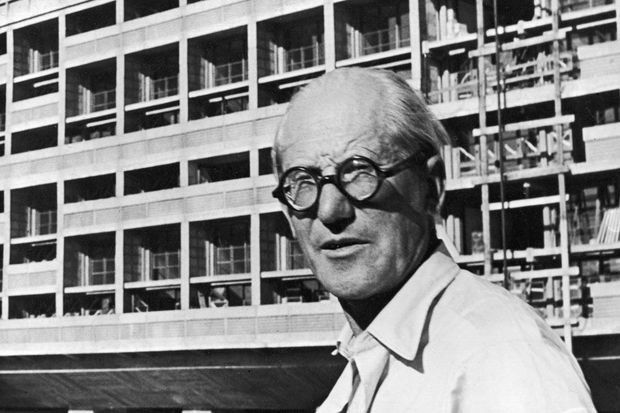 Photo of Le Corbusier, one of the founders of modern art
Le Corbusier's ideas were eventually adopted by architecture schools and the aesthetics of Art Deco were slowly abandoned. After World State of war II the style had gone completely out of fashion, with sure areas of industrial design remaining every bit the simply exception.
Summary main difference Fine art Deco and Fine art Nouveau
Hopefully the deviation between Fine art Nouveau and Art Deco has at present become articulate to y'all. Aside from the aspect of timing, what sets these two design movements apart largely comes down to aesthetics. The organic and flowing forms that define Art Nouveau were a clear response to artist'south desire to pause gratuitous from rigid classical and hierarchical structures, whereas the bolder and streamlined designs of Fine art Deco reflect the glamorization of the industrial revolution.
Where to purchase Fine art deco and Art Nouveau?
If you would like to purchase please take a look at a wide variety of Art Nouveau or Art Deco artworks which are available for auction at Gallerease!
Are yous searching for a specific Art Nouveau artist, like: Emile Gallé, Daum Frères, Clement Massier?
Or are you interested in more than information about Art Deco artists? They tin can be seen here, similar: René Lalique, and Camille Fauré!
Source: https://gallerease.com/en/magazine/articles/the-difference-between-art-nouveau-and-art-deco-explained__6ae04a6d3cbf
0 Response to "Differences and Similarities With Art Nouveau and Art Deco"
Post a Comment