What Is the Best Method to Use When Loading a Trailer to Have It Make Weight
Putting a heavy load on a trailer may require a bit of math and imagination to get the axle weight right. But running with too much weight at one finish or the other could affect the vehicle's dynamic stability and braking performance.
Tires on lightly loaded axles have less traction than heavily loaded tires. Improper loading could besides overload the suspension and would likely result in an overweight ticket if you were caught.
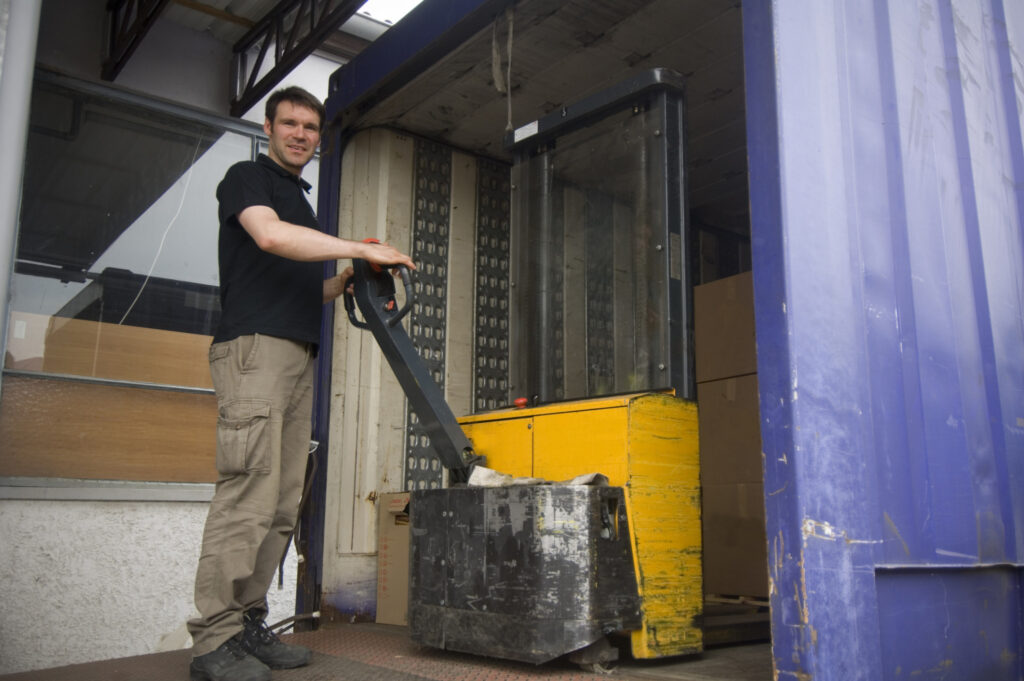
Figuring out how to place your cargo in or on the trailer is function scientific discipline, role art. It's easy to work out where to identify a load that consists of a number of pallets that have similar weights. With loads of dissimilar cargo, sometimes y'all take to get creative.
If y'all're not already familiar with your truck'south empty axle weight, the calculations beginning by weighing the truck. Most highway tractors vary from 18,000 to 21,000 lb., and nearly tandem van trailers weigh around 15,000 lb. Tridems and multi-axle trailers will be heavier, of class, as will refrigerated trailers.
Begin with your truck weight
Slide your fifth wheel and trailer axles into a "normal" configuration, with the kingpin slightly alee of center of the drive axle, and the trailer axles centered at the 41-foot mark to ensure compliance with the kingpin-to-trailer-axle measurement rules. Ideally the fuel tanks should exist full because this volition be your worst-case scenario.
Nosotros'll use round numbers for clarity. If the empty weight of a five-axle dry van tractor-trailer is 35,000 lb., the weight might be distributed something like this:
- steer axle: eleven,000 lb. (four,990 kg)
- drive axles: 14,000 lb. (half dozen,350 kg)
- trailer axles: 10,000 lb. (4,353 kg)
- tare weight: 35,000 lb. (15,875 kg)
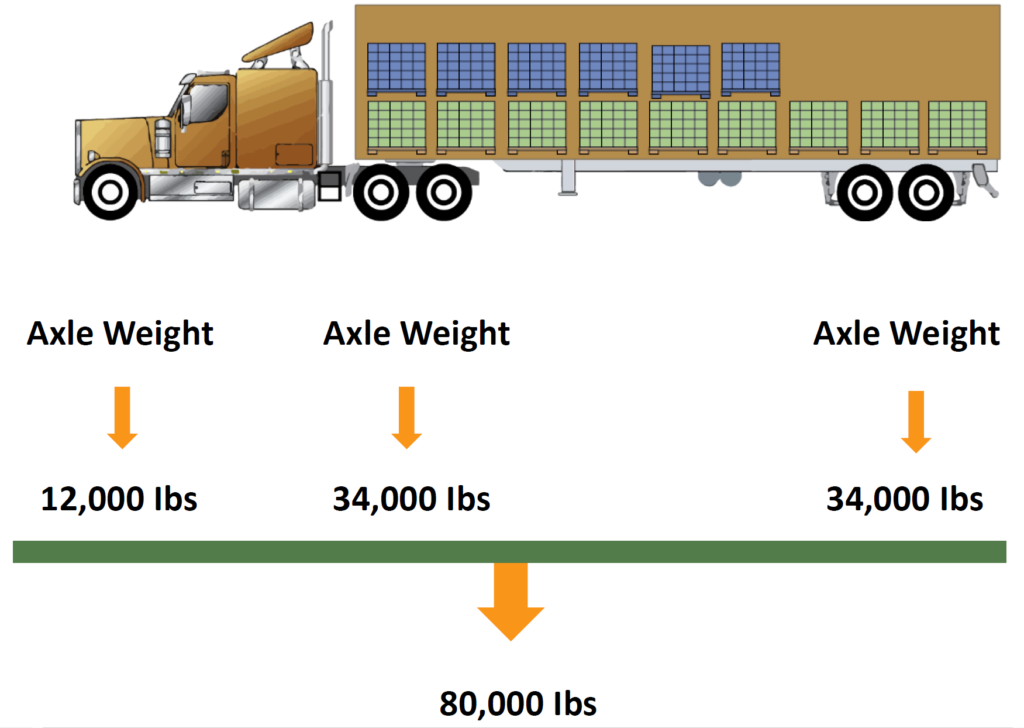
Over again, for clarity, we'll use American beam load limits of 12,000 lb. on the steer beam, and 34,000 lb. on the drive and trailer axles. The numbers volition exist unlike (five,500 kg, 17,000 kg and 17,000 kg), only the same thinking applies to Canadian weights.
In this case, your maximum payload could be 1,000 lb. on the steer, xx,000 lb. on the drives, and 24,000 lb. on the trailer axle — or 46,000 lb. for a gross vehicle weight of 80,000 lb.
At that place are a few things to consider before going whatever further. Does the weight on the nib of lading or cargo manifest include the weight of the pallets and whatsoever associated dunnage? Is the shipper known to be reliable when information technology comes to reporting cargo weight? Can your truck arrange the corporeality of weight yous're asked to pick up?
If you knew your tare weight, you would know in advance if yous can put the load on the truck. Once y'all're loaded it's on you to ensure weights are legal or ask the shipper to remove some of the cargo – if you can. Call back, you can remain nether gross weight just still be over the limit on an axle group, and that will besides earn you a ticket.
A million possibilities
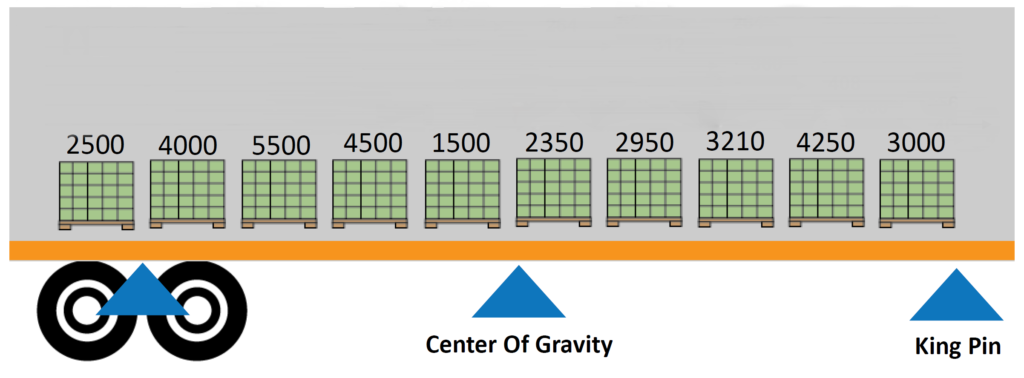
You can load anywhere from 26 to 30 standard 40×48-inch pallets on a 53-foot trailer — 26 if you load them direct in (48-inch measurements from front end to back), or 30 of you turn half the pallets sideways. A full load similar that offers no latitude when information technology comes to where the pallets are placed, so hopefully the load is light plenty that it won't affect your axle weight.
On the other hand, you might take a load of xi pallets weighing iv,000 lb. each, or worse, a mixed load with pallets of unlike heights, dimensions and weights.
Yous also need to consider cargo securement — even inside a van trailer. Roadside inspectors like to peek inside frequently enough. If they run across cargo that's not secured to preclude forward or lateral movement, they can get pretty excited. Non only must you consider beam weights when placing cargo on the trailer, you accept to be sure it won't shift in transit.
A good starting point is to visualize the pallets on the floor weighing virtually 800 lb. per human foot of flooring infinite from the front to the back. In other words, ii 48″ pallets sitting side by side could weigh every bit much as 3,200 lb., or virtually one,600 lb. per pallet. If it were that clean and elementary, you could load up to 28 of the 1,600-lb. pallets side by side, and forepart to back, for a payload of 44,800 lb.
Other considerations
But information technology'south rarely that elementary. Let'due south say you had eighteen 2,500-lb. pallets, leading to a 45,000-lb. payload. Side by side and from nose to tail, you lot'd have all that weight in the first 36 feet of the trailer. Chances are, y'all'd be heavy on the drive axles and light on the trailer axles.
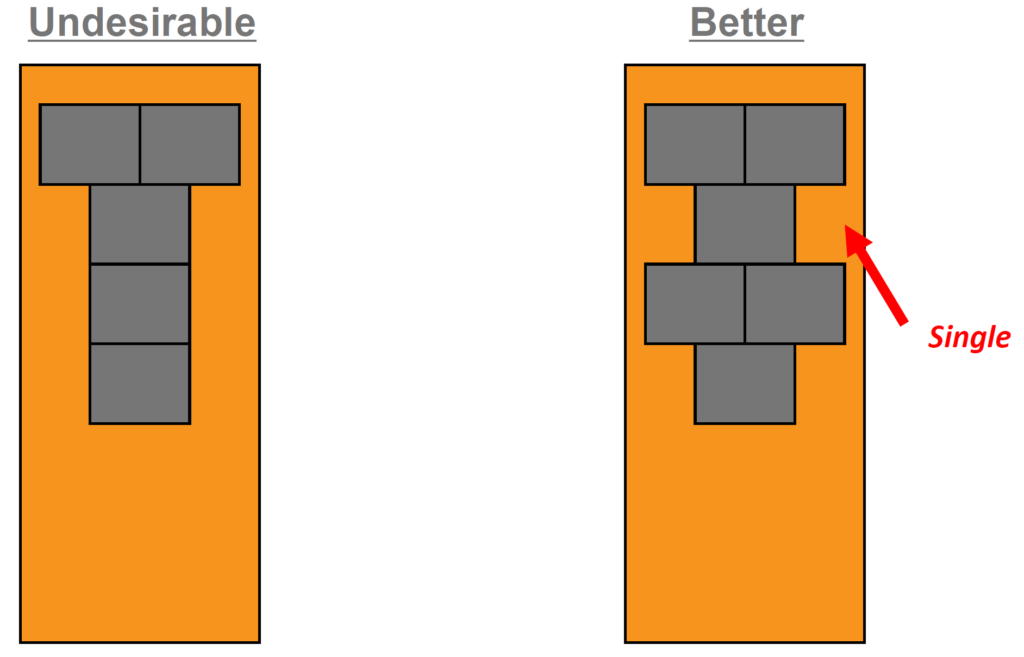
Merely if you lot staggered the pallets so there were two side by side, followed by one single pallet, and alternated that pattern all the way to the dorsum of the trailer, you lot would load to about the 48-human foot marker – right in a higher place the trailer axles. The per-foot load on the flooring would be 7,500 lb. over viii feet, and that'southward pretty close to the 800 lb. per human foot that nosotros're shooting for.
In this case, it might exist beneficial to place two unmarried pallets in a row somewhere close to the front end because the drive axles are heavier than the trailer axles when empty. (Film a layout of pallets that runs ii-one-1-2-1-1-2-1-2 until you reach the dorsum door.)
If the pallets are shrink-wrapped and the loader stuffs them in firmly up against the pallet in front end, they probably won't go anywhere or autumn over in transit.
Boilerplate that weight
With loads of pallets of various weights, you'll have to use a calculator to figure out which pallets tin go side-by-side to give you the 800 lb. per foot that you desire. This may require extending your loading pattern out into eight- or 12-foot segments rather than four-human foot (48-inch) segments, and averaging the 800 lb. per foot over viii or 12 anxiety.
This is where the art of loading comes into play, along with the science. Yous take to distribute the weight more or less evenly from front end to back, but y'all can skew your figures a fleck to load a piddling heavier in the middle and lighter at the forepart and rear. This helps distribute the weight a scrap more evenly over the length of the trailer.
In such a case, you may exist looking at 8-to-12-foot increments. For example, it might mean a 3,000-lb. pallet and 2,000-lb. pallet loaded adjacent, followed past a one,500 pounder and 2,500 pounder, and then a single 2,000 pounder. That you give you lot 11,000 lb. over 12 feet, which is reasonable.
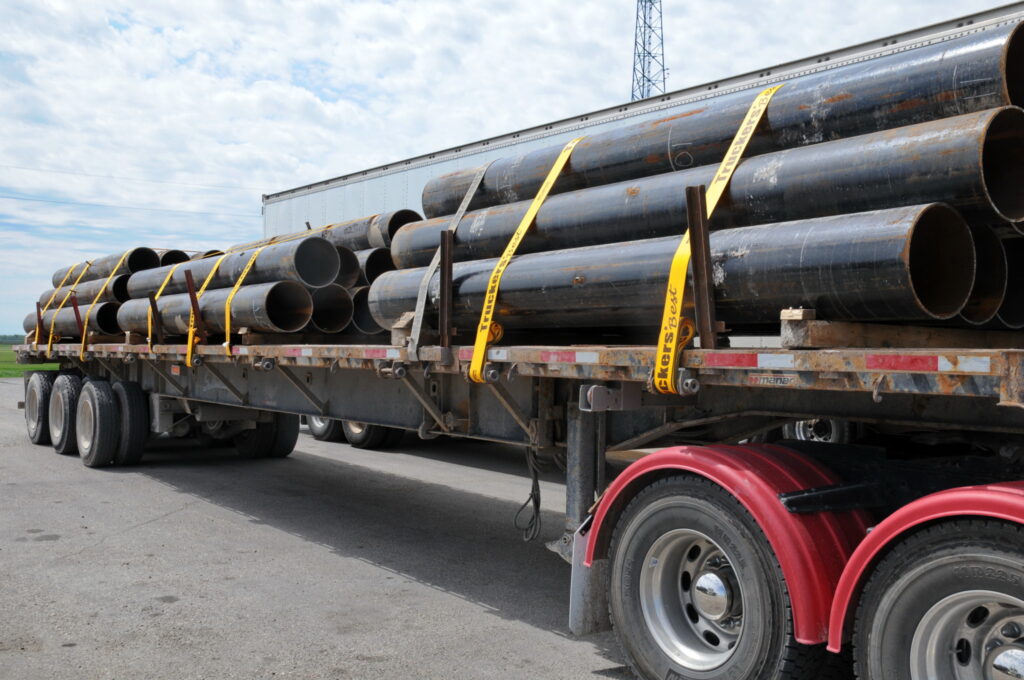
The voids that result when yous load a single pallet are cause for concern. Yous want to avoid such a situation where you can, just it's not always possible. Some shippers offer cardboard dunnage or inflatable air bags to help fill voids. Cargo restraining straps are useful, equally are restraining or decking bars. Load locks are mostly not regarded every bit suitable cargo restraint devices and may not be accepted by a curious roadside inspector, so don't depend on them to restrain singled-out pallets. They are definitely not adequate every bit forward restraint devices when starting a row with nothing in front.
It's your responsibleness
In summary, many shippers accept established ways of loading trailers with direct and predictable loads. There's a bigger challenge with mixed loads or when yous're loading the trailer for multiple drops and the cargo has to be loaded in a specific social club.
Every bit the person in charge of the truck, how information technology'south loaded is ultimately your responsibleness. Shippers just want the freight off their dock, so if you're not comfy with the style they want to load it, call a supervisor and talk over the situation. It's meliorate to be a knowledgeable pain in the neck than the i property the overweight ticket.
Any load that takes you to within x,000 lb. of your gross weight deserves special attention for load distribution. It'southward possible to put 35,000 lb. of freight in 30 anxiety of trailer, simply all the weight would be in the front. That's non the way it needs to exist.
Make notes on how much the truck weights empty, how it'southward loaded, and where the weight goes once it's on the truck. As you learn the fashion weight is distributed across the axles, you'll get better at loading evenly from forepart to back.
– Transportation Warehouse Optimization has produced a worksheet that shows shippers how to load a trailer. There are some useful tips here for drivers, too.
- Driver's Didactics is an ongoing serial of articles that focuses on things drivers need to know, but may not accept learned during entry-level commuter training.
Source: https://www.trucknews.com/features/how-to-load-trailers-and-distribute-weight-trucking-202/
0 Response to "What Is the Best Method to Use When Loading a Trailer to Have It Make Weight"
Post a Comment